
In the world of business investment, entering a company is only half the journey. Equally important is knowing how and when to exit. A business investor exit strategy is a planned approach for an investor to realize returns on their investment, minimize risks, and achieve financial goals. Whether investing in startups, private companies, or established enterprises, exit strategies are essential for both investors and business owners.
A clear exit strategy not only ensures that investors maximize their returns but also provides companies with a roadmap for growth, funding, and strategic planning. Understanding the different types of exit options, their advantages, and implications is critical for informed decision-making.
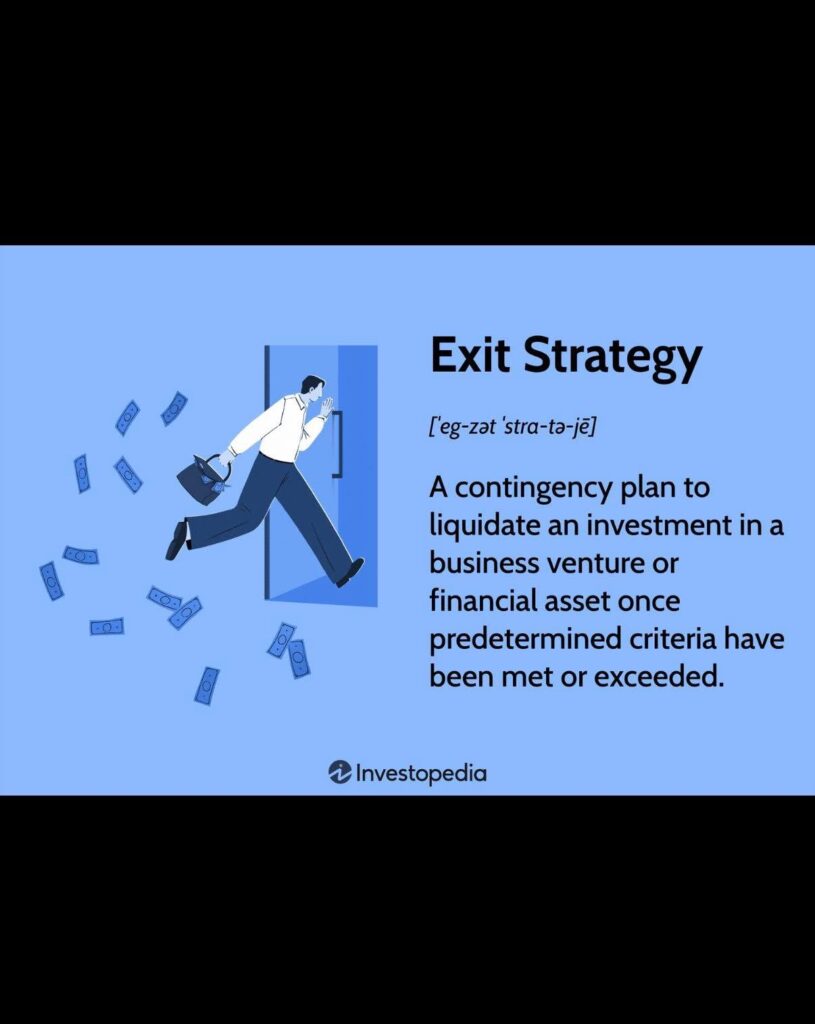
What Is a Business Investor Exit Strategy?
A business investor exit strategy is a planned method by which an investor can liquidate or sell their investment stake in a company to achieve financial returns. It is a structured approach that defines:
- When the investor will exit the investment
- How the exit will occur
- The expected financial returns or valuation targets
- Potential risks and contingencies
Exit strategies are usually agreed upon during the initial investment or funding round. They provide clarity and alignment between investors and founders, ensuring that both parties understand the long-term plan for capital realization.
Importance of Exit Strategies for Investors
- Realizing Financial Returns
The primary purpose of an exit strategy is to convert ownership or investment into tangible returns. Without a clear exit, investors may face uncertainty regarding the value or timing of their returns. - Risk Management
Exit strategies help mitigate risks associated with market volatility, business underperformance, or unforeseen challenges. Planning an exit ensures that investors can protect capital and optimize returns. - Strategic Alignment
Having a predefined exit strategy aligns investors and founders, ensuring that growth plans, funding rounds, and operational strategies support the eventual exit objectives. - Portfolio Planning
Investors typically hold multiple investments. Exit strategies allow them to manage liquidity, reallocate capital, and maintain a balanced, diversified portfolio. - Enhanced Credibility
Investors with well-defined exit plans are perceived as professional and strategic, fostering trust with founders, co-investors, and potential partners.
Types of Investor Exit Strategies
- Initial Public Offering (IPO)
An IPO involves offering a company’s shares to the public on a stock exchange. It allows investors to sell part or all of their equity while providing the company with access to public capital.
Advantages: High visibility, potential for significant returns, credibility enhancement.
Challenges: Expensive, highly regulated, and subject to market fluctuations. - Acquisition or Trade Sale
The company is sold to another company, often a competitor, strategic partner, or conglomerate. Investors receive proceeds based on their equity stake.
Advantages: Faster exit than IPO, can yield substantial returns, strategic alignment with the buyer.
Challenges: Negotiation complexity, dependence on buyer interest, potential integration issues. - Secondary Sale
Investors sell their stake to another private investor, venture capital firm, or institutional buyer. This is common in later-stage funding rounds.
Advantages: Flexibility, controlled negotiation, and quick liquidity.
Challenges: Limited market, valuation negotiation may be difficult, potential dependence on investor interest. - Management Buyout (MBO)
The company’s management team acquires the investor’s stake, often with financing support.
Advantages: Smooth transition, management aligned with business growth, preserves company culture.
Challenges: Financing complexities, negotiation of fair valuation, limited buyer pool. - Merger
The company merges with another entity, and investors may receive shares in the new combined company or cash proceeds.
Advantages: Can enhance scale and value, potential for higher returns.
Challenges: Complexity, regulatory approvals, alignment of stakeholders. - Dividend Recapitalization
Investors may recover part of their investment through dividends funded by debt or company profits without selling their stake.
Advantages: Ongoing cash flow, less disruptive than full exit.
Challenges: Risk of debt over-leverage, limited upside compared to full sale.
Factors Influencing Exit Strategy Choice
- Company Stage
Early-stage startups may prefer acquisitions or secondary sales, while mature companies may consider IPOs or strategic mergers. - Market Conditions
Economic cycles, industry trends, and investor sentiment impact the feasibility and timing of exits. - Investor Objectives
Liquidity needs, return expectations, risk tolerance, and investment horizon shape exit strategy selection. - Regulatory Environment
Legal, tax, and regulatory frameworks influence the timing, structure, and type of exit. - Company Performance
Revenue growth, profitability, and market positioning determine whether an IPO, acquisition, or secondary sale is viable.
Best Practices for Planning an Investor Exit Strategy
- Define Objectives Early
Investors should set clear financial goals, time horizons, and acceptable risk levels at the outset of the investment. - Align With Founders
Exit plans should be mutually agreed upon, ensuring that growth strategies, funding rounds, and business decisions support eventual liquidity events. - Regular Performance Review
Monitor company metrics, market conditions, and industry trends to adjust exit timing and strategy proactively. - Diversify Exit Options
Investors should consider multiple exit pathways to maximize flexibility, minimize risk, and optimize returns. - Engage Professional Advisors
Legal, financial, and industry advisors can provide guidance on valuation, negotiation, and regulatory compliance. - Prepare for Contingencies
Develop backup plans for unforeseen market changes, economic downturns, or company underperformance to protect capital.
Benefits of a Well-Defined Exit Strategy
- Predictable Liquidity
Investors can plan cash flow, reinvestment, or personal financial strategies based on anticipated exit timing. - Risk Reduction
Structured exit strategies reduce exposure to market volatility and business-specific risks. - Stronger Investor-Company Relationships
Clear exit plans enhance trust, align expectations, and foster long-term strategic collaboration. - Maximized Returns
Planning the optimal exit path, timing, and valuation enhances the likelihood of achieving high returns. - Portfolio Optimization
Enables investors to allocate capital efficiently across multiple investments, balancing risk and reward.
Challenges in Executing Exit Strategies
- Market Volatility
Fluctuating economic conditions can delay IPOs, reduce acquisition interest, or lower valuations. - Company Performance Risk
Underperformance may reduce the attractiveness of exit options or limit potential returns. - Negotiation Complexities
Valuation disagreements, shareholder approvals, and legal issues can complicate exit execution. - Timing Dilemmas
Exiting too early may result in missed growth opportunities, while delaying can increase risk exposure. - Regulatory and Compliance Hurdles
Especially in IPOs and mergers, navigating legal requirements can be time-consuming and costly.
Case Example
- Startup Acquisition: A venture capitalist invested $2 million in a tech startup for a 20% equity stake. After five years of growth and expansion, the company was acquired by a larger tech firm. The investor’s equity stake converted into $10 million cash, realizing a five-fold return on investment.
- IPO Exit: A private equity firm invested in a consumer goods company during its growth stage. Three years later, the company went public, and the firm sold part of its shares at the IPO, securing substantial returns while retaining some ownership for future gains.
A business investor exit strategy is a critical component of the investment lifecycle. It allows investors to plan for liquidity, maximize returns, manage risks, and align expectations with company founders. Whether through IPOs, acquisitions, secondary sales, or other mechanisms, a well-planned exit ensures that both investors and companies benefit strategically and financially.
For investors, defining exit strategies early, monitoring company performance, and remaining adaptable to market conditions are key to successful outcomes. For companies, understanding investor exit plans helps align growth strategies, maintain strong relationships, and prepare for future funding or ownership transitions.
Ultimately, an effective exit strategy transforms investments into realized value, providing both financial rewards and strategic leverage in an increasingly complex and competitive business environment.